🚚 Free Worldwide Shipping on All Orders!Shop Now

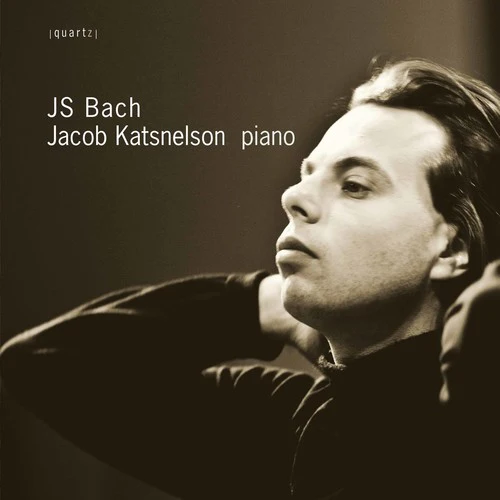
Bach: Keyboard Works / Jacob Katsnelson
BACH Suite in a, BWV 818a. Capriccio on the Departure of a Beloved Brother, BWV 992. 3-Part Sinfonias, BWV 787–801. Prelude and Fugue in b, BWV 544 (arr. Liszt) • Jacob Katsnelson (pn) • QUARTZ 2084 (59:40)
At first I couldn’t place him, but I knew that somewhere I’d met Jacob Katsnelson before. Then it hit me. He was the pianist who accompanied Maxim Rysanov in a couple of numbers on a two-disc Onyx set of Brahms’s chamber works in viola transcriptions, reviewed in Fanfare 32: 5. Frankly, my focus was so centered on Rysanov that I didn’t pay much attention to Katsnelson at the time.
He was born in Moscow in 1976, entered the Moscow Conservatory in 1993, and since 2001 has taught at the Moscow State Tchaikovsky Conservatory. He has soloed throughout Russia, as well as in Austria, Germany, Spain, and France, done the competition thing, won prizes, participated in festivals, and yada yada. By now it’s an old and familiar story: Gifted youngster enters conservatory, wows competition judges and talent scout, lands recording contract, and makes it big on the international concert scene.
Sometimes, the big splash dissipates in receding ripples on the pond; other times, not. I can’t say what will happen with Katsnelson in the long term; I can only register my reaction to his playing in the here and now, and that reaction is overwhelmingly positive. This is one of the most satisfying Bach recitals on piano to come my way in a long time.
To begin with, as I’ve made clear in the past, when I listen to Bach on piano, I don’t want the artist to apologize for the instrument by playing it as if it were a harpsichord. There’s no hint of that with Katsnelson. He uses the full range of the piano’s dynamic, sustaining, and expressive potential. And his instrument, amusingly credited in the booklet as “a regular piano”—I presume to distinguish it from a fortepiano—is a concert grand, model E-272, from Bayreuth maker Steingraeber & Son, a magnificent specimen if I may say so.
Further research on the company’s website reveals a number of interesting details and specifications about this new instrument: “Unique features include the unusual shape of the sound-reflecting rims, the combined star-shaped and half-timbered braces, and the ‘incredibly agreeable’ (Cyprien Katsaris) touch. The most uncommon feature, however, is the shape of the soundboard in the treble. The resonating space was newly reconstructed, based on the classical relationship between [short] string length and resonating space. Steingraeber strings have 27 percent less wood mass to penetrate than comparable instruments by other piano builders! The result is a tone that is present and singing, even in softer passages.”
The part about softer passages is true. Katsnelson’s pianissimos diminuendo to a whisper. But there’s no compromise in fullness of tone, resonance, or raw power. The recording, made in 2009 at the Steingraeber studio, could serve as a standard against which recorded reproduction of piano sound is measured. Intimate, as in a private music room, yet acoustically alive and vibrant, every subtlety of the instrument’s complex palette is captured and projected with amazing lifelike presence. It stands to reason, of course, that a piano manufacturing firm would design and engineer a perfect acoustic space in which to conduct painstaking measurements and tests of its products. This is the high-tech world of attaching scopes and computers to the sounding board and of analyzing streams of ones and zeros. In this case, it worked wonders.
All would be for naught, of course, if Katsnelson didn’t know his way around Bach, but he does. There are some performance idiosyncrasies, like the tendency to roll chords at cadences, that purists may find objectionable, but in general Katsnelson’s approach is not of the romantic persuasion. He avoids grand ritards and other sins of exaggerated point-making. He does, however, as noted, make full use of the piano’s dynamic range and sustaining power, which means that he crescendos and decrescendos and applies pedals where it makes musical sense to do so. The result is a transparency of voicing that allows every strand of Bach’s counterpoint to be heard with pellucid precision.
For lack of a better term, I’d describe Katsnelson’s tempos as temperate. Fast movements are set within sane ranges of the metronome’s upper regions, an indication that Katnelson is not interested in promoting himself as a virtuosic marvel at the expense of Bach. And slow movements are not pondered and pestered to the point of prostration, an indication that Katnelson does not approach Bach with an attitude of affected reverence that can come across as so much pious posturing. No, Katsnelson’s Bach is refreshingly straightforward and superbly executed. This gets a very strong recommendation.
FANFARE: Jerry Dubins
$5.70
Original: $18.99
-70%Bach: Keyboard Works / Jacob Katsnelson—
$18.99
$5.70Product Information
Product Information
Shipping & Returns
Shipping & Returns
Description
BACH Suite in a, BWV 818a. Capriccio on the Departure of a Beloved Brother, BWV 992. 3-Part Sinfonias, BWV 787–801. Prelude and Fugue in b, BWV 544 (arr. Liszt) • Jacob Katsnelson (pn) • QUARTZ 2084 (59:40)
At first I couldn’t place him, but I knew that somewhere I’d met Jacob Katsnelson before. Then it hit me. He was the pianist who accompanied Maxim Rysanov in a couple of numbers on a two-disc Onyx set of Brahms’s chamber works in viola transcriptions, reviewed in Fanfare 32: 5. Frankly, my focus was so centered on Rysanov that I didn’t pay much attention to Katsnelson at the time.
He was born in Moscow in 1976, entered the Moscow Conservatory in 1993, and since 2001 has taught at the Moscow State Tchaikovsky Conservatory. He has soloed throughout Russia, as well as in Austria, Germany, Spain, and France, done the competition thing, won prizes, participated in festivals, and yada yada. By now it’s an old and familiar story: Gifted youngster enters conservatory, wows competition judges and talent scout, lands recording contract, and makes it big on the international concert scene.
Sometimes, the big splash dissipates in receding ripples on the pond; other times, not. I can’t say what will happen with Katsnelson in the long term; I can only register my reaction to his playing in the here and now, and that reaction is overwhelmingly positive. This is one of the most satisfying Bach recitals on piano to come my way in a long time.
To begin with, as I’ve made clear in the past, when I listen to Bach on piano, I don’t want the artist to apologize for the instrument by playing it as if it were a harpsichord. There’s no hint of that with Katsnelson. He uses the full range of the piano’s dynamic, sustaining, and expressive potential. And his instrument, amusingly credited in the booklet as “a regular piano”—I presume to distinguish it from a fortepiano—is a concert grand, model E-272, from Bayreuth maker Steingraeber & Son, a magnificent specimen if I may say so.
Further research on the company’s website reveals a number of interesting details and specifications about this new instrument: “Unique features include the unusual shape of the sound-reflecting rims, the combined star-shaped and half-timbered braces, and the ‘incredibly agreeable’ (Cyprien Katsaris) touch. The most uncommon feature, however, is the shape of the soundboard in the treble. The resonating space was newly reconstructed, based on the classical relationship between [short] string length and resonating space. Steingraeber strings have 27 percent less wood mass to penetrate than comparable instruments by other piano builders! The result is a tone that is present and singing, even in softer passages.”
The part about softer passages is true. Katsnelson’s pianissimos diminuendo to a whisper. But there’s no compromise in fullness of tone, resonance, or raw power. The recording, made in 2009 at the Steingraeber studio, could serve as a standard against which recorded reproduction of piano sound is measured. Intimate, as in a private music room, yet acoustically alive and vibrant, every subtlety of the instrument’s complex palette is captured and projected with amazing lifelike presence. It stands to reason, of course, that a piano manufacturing firm would design and engineer a perfect acoustic space in which to conduct painstaking measurements and tests of its products. This is the high-tech world of attaching scopes and computers to the sounding board and of analyzing streams of ones and zeros. In this case, it worked wonders.
All would be for naught, of course, if Katsnelson didn’t know his way around Bach, but he does. There are some performance idiosyncrasies, like the tendency to roll chords at cadences, that purists may find objectionable, but in general Katsnelson’s approach is not of the romantic persuasion. He avoids grand ritards and other sins of exaggerated point-making. He does, however, as noted, make full use of the piano’s dynamic range and sustaining power, which means that he crescendos and decrescendos and applies pedals where it makes musical sense to do so. The result is a transparency of voicing that allows every strand of Bach’s counterpoint to be heard with pellucid precision.
For lack of a better term, I’d describe Katsnelson’s tempos as temperate. Fast movements are set within sane ranges of the metronome’s upper regions, an indication that Katnelson is not interested in promoting himself as a virtuosic marvel at the expense of Bach. And slow movements are not pondered and pestered to the point of prostration, an indication that Katnelson does not approach Bach with an attitude of affected reverence that can come across as so much pious posturing. No, Katsnelson’s Bach is refreshingly straightforward and superbly executed. This gets a very strong recommendation.
FANFARE: Jerry Dubins